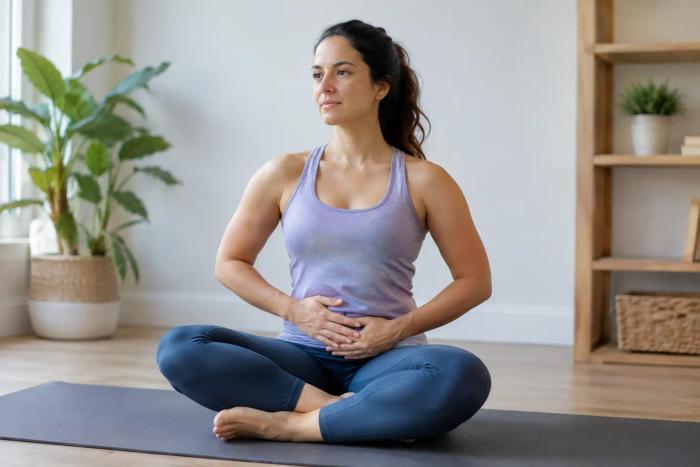

A Guide to Tantric Self Connection at Home

Your relationship with your own body sets the tone for every kind of intimacy you create. When you are rushing, judging yourself, or treating pleasure as something you have to earn, it can be difficult to feel truly available for touch, desire, or connection. A guide to tantric self connection begins somewhere simpler and more powerful: learning to meet yourself exactly where you are.
Tantra is often reduced to sexual technique, but its deeper invitation is presence. It asks you to bring awareness to breath, sensation, emotion, energy, and desire without forcing any of them to perform. You do not need a partner, special flexibility, or a perfectly calm mind to begin. You need privacy, curiosity, and permission to move at your own pace.
What Tantric Self Connection Really Means
Tantric self connection is the practice of being intimately present with yourself. It can include sensuality and erotic energy, but it is not a performance and it does not need to lead to orgasm. For some people, it may begin with noticing tension in the belly. For others, it may mean allowing themselves to receive a comforting touch without immediately pulling away.
This practice brings body, heart, and mind into the same room. Instead of chasing a specific result, you listen for what feels honest. You might discover longing, grief, numbness, pleasure, tenderness, frustration, or joy. All of it can belong.
That is one reason self connection can feel transformative. Many of us learned to override our own signals in order to be desirable, productive, agreeable, or safe. Tantric practice gently reverses that habit. It teaches you that your sensations are information, your boundaries are worthy of respect, and your pleasure is not separate from your wellbeing.
Begin With Safety, Not Pressure
Before any sensual practice, create conditions that help your nervous system settle. Choose a time when you are unlikely to be interrupted. Silence notifications, lower the lights if that feels supportive, and have water or a blanket nearby. These small choices tell your body that it does not need to stay on alert.
Set an intention that is kind rather than demanding. “I want to feel everything” can feel like a lot if you have been disconnected from your body for years. Try something gentler: “For the next ten minutes, I will listen without judgment.”
Consent matters when you are alone, too. Check in with yourself before, during, and after practice. If something feels too intense, confusing, painful, or emotionally overwhelming, pause. Place one hand on your heart or belly, open your eyes, and orient yourself to the room. You are always allowed to stop, change direction, or choose a less activating practice.
If sexual touch brings up trauma, panic, dissociation, or persistent distress, keep your practice nonsexual for now and consider working with a trauma-informed therapist or qualified somatic professional. Tantra can support healing, but it is not a substitute for mental health care.
A Gentle Tantric Self Connection Practice
Start with 15 to 20 minutes. The value is not in doing more. It is in staying present enough to notice what is true.
Arrive through breath
Sit or lie down in a position that feels easy to maintain. Let one hand rest on your chest and the other on your lower belly. Take several unhurried breaths, allowing your exhale to be slightly longer than your inhale.
Do not try to make your breath dramatic. Simply feel the movement beneath your palms. Notice whether one area of your body feels more available than another. There is no need to fix tightness. Acknowledging it is already a form of connection.
Wake up sensation slowly
Begin with nonsexual touch. Stroke your arms, massage your hands, or place warm palms on your face, neck, thighs, or feet. Move slowly enough that you can actually feel the contact. Ask yourself, “Is this pleasant, neutral, or too much?”
This question is central to tantric self connection because it replaces autopilot with choice. If your body wants firmer pressure, offer it. If it wants stillness, pause. If you feel very little, that is not a failure. Numbness is often a protective response, and patience is more useful than pushing.
Let sound and movement join in
When it feels natural, add small movements. Circle your hips, stretch, sway, or let your spine lengthen and soften. You can hum on the exhale, sigh, or make any sound that helps release held tension. Sound is not meant to be sexy for anyone else. It is a way to give sensation a pathway out of the body.
You may notice energy building, emotion moving, or nothing especially dramatic. Tantra makes room for all three. The practice is not measured by intensity. It is measured by how honestly you stay with yourself.
Explore sensual or erotic touch with curiosity
If and only if it feels aligned, you may bring attention to your breasts, chest, genitals, or other erotic zones. Keep the same pace you used earlier. Rather than going straight toward climax, explore temperature, texture, pressure, rhythm, and breath.
Try resting rather than constantly moving. Try slowing down just when you want to speed up. Notice the difference between touch that comes from urgency and touch that comes from care. For many people, this is where old patterns become visible: striving to finish, disconnecting from feeling, or believing pleasure only counts if it looks a certain way.
There is no correct response. Orgasm may happen, it may not, or it may not be part of your intention at all. The deeper practice is remaining connected to yourself throughout the experience.
Close the practice with integration
When you are ready, let your hands rest on your body and become still. Feel the surface beneath you. Name three sensations you can notice right now: warmth, softness, pulsing, heaviness, spaciousness, or perhaps a simple sense of calm.
Then ask, “What do I need after this?” The answer may be water, a shower, food, sleep, journaling, a walk, or simply a few quiet minutes. Integration protects the tenderness you have created and helps your body learn that opening up can be followed by care.
Common Blocks Are Part of the Path
It is common to feel awkward at first. You may have spent much of your life relating to your body through appearance, function, or someone else’s approval. Being alone with sensation can feel unfamiliar before it feels freeing.
Shame may also show up, especially around desire, pleasure, or the parts of your body you were taught to hide. Do not argue with shame or try to spiritually bypass it. Meet it with compassion. You might place a hand where you feel the contraction and say, “You do not have to disappear for me to be here with you.”
A busy mind is another frequent companion. Instead of treating thoughts as an obstacle, return to one physical anchor: the weight of your body, the movement of breath, or the feeling of your palms. Presence is not the absence of thought. It is the choice to come back.
Make Your Practice Sustainable
A short, consistent ritual is often more nourishing than an occasional two-hour ceremony. You might take five minutes before sleep to breathe with a hand on your belly, offer yourself a slow body oil massage after a shower, or practice one song of free movement with the door closed.
It also helps to separate self connection from productivity. You do not need to become more confident, more orgasmic, or more spiritually evolved by next week. Those changes may come, but they are side effects of listening, not requirements for worthiness.
As your relationship with yourself deepens, you may find it easier to communicate needs with a partner, receive affection without bracing, or recognize when a boundary needs to be spoken. This is not because tantra gives you a script. It gives you a more intimate relationship with your own yes, no, and maybe.
Your body has its own language and its own timing. Return to it with patience, and let each moment of honest attention become a quiet reminder: you are someone worth coming home to.