.png)
.jpg)
A Gentle Guide to Pelvic Floor Awareness

The pelvic floor is often discussed only when something feels wrong: leaking, pain, numbness, tension, or a frustrating sense of disconnection during sex. Yet this hidden landscape can also be a doorway into more ease, sensitivity, confidence, and choice. This guide to pelvic floor awareness is an invitation to meet that part of your body without pressure to fix, perform, or achieve anything.
Your pelvic floor does not need to be constantly tightened or controlled. Like your breath, it is designed to move, respond, and adapt. Awareness begins when you replace judgment with curiosity.
What Is the Pelvic Floor?
The pelvic floor is a layered group of muscles, connective tissues, and nerves at the base of the pelvis. It supports the bladder and bowel, and for many people, the uterus, prostate, and sexual organs. It also plays a role in posture, breath, arousal, orgasm, elimination, and the feeling of being grounded in your body.
Because it is connected to so many intimate experiences, the pelvic floor can hold more than physical tension. Stress, shame, trauma, chronic bracing, body image worries, and learned beliefs about sexuality may all influence how it feels to inhabit this area. That does not mean every sensation has a deep emotional story behind it. It simply means the body and inner life are not separate.
For some people, pelvic floor awareness brings a welcome feeling of coming home. For others, it may initially reveal numbness, discomfort, grief, or anxiety. Both responses are valid. Go slowly, and let comfort - not intensity - guide your pace.
Pelvic Floor Awareness Is Not Just About Kegels
Kegels, or deliberate pelvic floor contractions, can be useful in specific situations. But they are not a universal answer. Many people already hold too much tension in the pelvis, especially when they are stressed, highly driven, in pain, or accustomed to “holding it together.” More squeezing can sometimes make discomfort, urgency, constipation, or painful sex worse.
True pelvic floor awareness includes the ability to sense both contraction and release. It is knowing when the muscles naturally respond, when they soften, and whether you can allow that movement without forcing it. Think less about strengthening a single body part and more about building a relationship with your whole lower body.
Your breath, jaw, belly, hips, glutes, inner thighs, and nervous system all influence the pelvic floor. If your jaw is clenched, for example, your pelvis may be bracing too. If you are rushing through the day with your belly pulled in, your pelvic floor may never receive the signal that it is safe to soften.
Start With Breath and Sensation
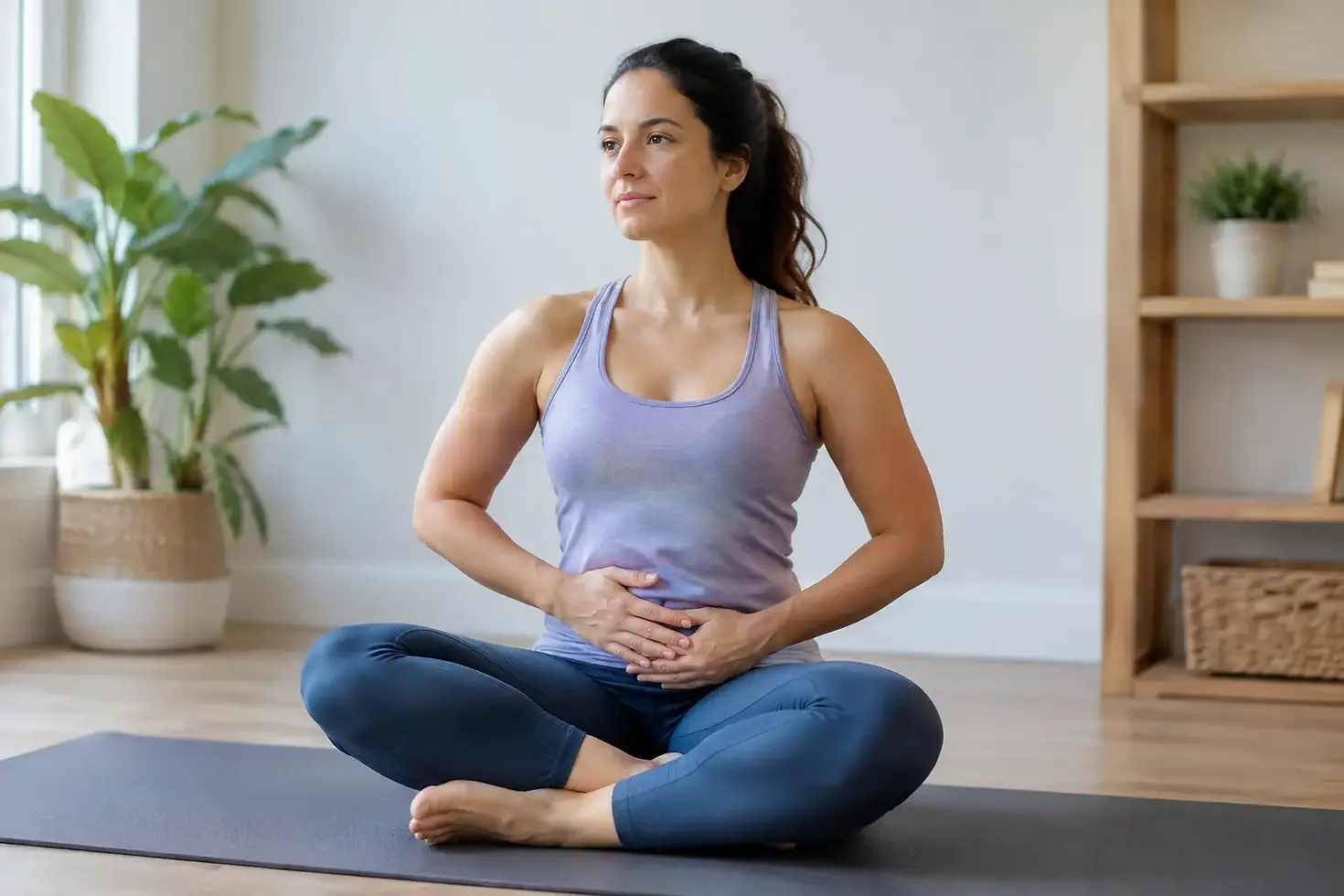
You do not need special tools or a long practice to begin. Choose a private moment when you are not likely to be interrupted. You might lie on your back with your knees bent, sit supported in a chair, or rest on your side with a pillow between your knees.
Place one hand on your lower belly and, if it feels comfortable, one hand over your sacrum or low back. Breathe normally for a few moments. There is no need to create an exaggerated inhale or push your belly outward.
As you inhale, notice whether the breath seems to travel down toward the base of your pelvis. Some people sense a subtle widening, dropping, or softening around the perineum, the area between the genitals and anus. As you exhale, you may feel a gentle natural gathering. Do not try to make it happen. Simply observe what is already there.
If you feel nothing, that is still information. Numbness is not failure. It may be your body’s way of saying, “I need more time, safety, or gentleness before I become louder.” Stay with broad sensations such as warmth, pressure, contact with the chair, or the movement of your ribs.
A Simple Check-In Practice
Try this for three to five minutes:
1. Inhale and silently ask, “Can I allow a little more space?”
2. Exhale and ask, “What can soften by one percent?”
3. Notice your jaw, belly, buttocks, and inner thighs without trying to perfect them.
4. End by feeling the support beneath you and naming one neutral or pleasant sensation.
This small practice can be more transformative than forcing a long routine. You are teaching your nervous system that attention can be safe.
Bring Awareness Into Everyday Life
Pelvic floor connection is not reserved for meditation cushions or intimate moments. It can become a quiet thread through your day.
Notice what happens in your pelvis when you answer an email that makes you nervous, lift something heavy, sit in traffic, or hold back tears. You may discover that your body braces before your mind has even named the stress. Rather than criticizing yourself, take one slower exhale and feel your feet on the floor.
Movement can help too. Gentle hip circles, a supported squat, a relaxed walk, or slow stretching may reveal where you grip. The goal is not to force openness. Bodies have different structures, needs, and histories. A squat that feels nourishing for one person may feel uncomfortable for another.
If you spend long hours sitting, experiment with changing position more often. Let your belly be soft instead of constantly drawn in. When using the bathroom, give yourself time. Straining or rushing teaches the pelvis to work against itself.
Pelvic Floor Awareness and Sexual Pleasure
During arousal, the pelvic floor often becomes more active. That activation can contribute to sensation, orgasmic contractions, and feelings of fullness or aliveness. But more tension does not automatically mean more pleasure.
Pleasure tends to deepen when you can sense what is happening and respond honestly. Perhaps a certain touch makes you contract with anticipation. Perhaps you want to breathe, slow down, change position, or pause. Pelvic floor awareness gives you more language inside your own body, even before you speak out loud.
For solo exploration, begin without an agenda. You might place a hand over your lower belly, breathe, and notice what helps you feel settled. If you include genital touch, keep the focus on sensation rather than a specific outcome. Ask yourself: Is my body opening, guarding, warming, tingling, or asking for less?
With a partner, this awareness can support more conscious intimacy. You can share simple observations: “I need a slower pace,” “I feel myself tightening,” or “That feels good when I can breathe.” These are not interruptions to intimacy. They are intimacy - honest, embodied, and responsive.
When Tightness, Pain, or Fear Shows Up
It is common to assume that a difficult pelvic floor needs more effort. Often, the wiser response is less force and more support. If you experience persistent pelvic pain, pain with penetration, pain after orgasm, urinary or bowel changes, prolapse symptoms, or unexplained numbness, seek guidance from a qualified healthcare professional. A pelvic floor physical therapist can offer individualized assessment and care.
If body awareness brings up intense emotions, panic, dissociation, or memories of trauma, pause the practice. Return to external anchors: look around the room, feel your feet, hold something soft, or connect with a trusted therapist or trauma-informed practitioner. You never need to push through distress to heal.
This is especially important in sensual or tantric exploration. Sacred sexuality is not about overriding your boundaries in pursuit of expansion. It is about honoring the wisdom of your yes, your no, your not yet, and your desire to go slowly.
A More Loving Relationship With Your Body
The deepest benefit of pelvic floor awareness may be the shift from managing your body to listening to it. You begin to recognize that relaxation is not passivity, and sensitivity is not weakness. Your body can be both tender and powerful.
Some days you may feel spacious and connected. Other days, your pelvis may feel quiet, tired, guarded, or far away. Let your practice make room for all of it. Consistency matters more than intensity, and compassion matters more than progress.
Give yourself a few unhurried breaths today. Feel the ground holding you, soften what you can, and allow your pelvic floor to be part of your wholeness rather than another part of you that needs to be improved.





Comments