Tantra for Beginners: Where to Start

If the word tantra brings up equal parts curiosity, excitement, and nervousness, you are in the right place. Tantra for beginners is not about performing anything perfectly or becoming instantly confident in your body. It is about slowing down enough to feel, notice, and relate to yourself and others with more honesty, pleasure, and presence.
Many people arrive at tantra after feeling disconnected - from their desire, from their partner, or from their own body. Others come because sex feels routine, intimacy feels blocked, or old shame still sits quietly in the background. And some are simply drawn to the sense that there must be more available in love, pleasure, and connection than what they have been taught. Tantra can meet all of that, but only when you begin with the right expectations.
What tantra for beginners really means
A beginner-friendly understanding of tantra is simple: tantra is a practice of presence. It brings awareness into the body, breath, emotions, energy, and intimacy. While many people first hear about tantra through sexual practices, traditional tantra is broader than sex. It includes meditation, ritual, devotion, conscious touch, breathwork, and a different relationship with life force itself.
That matters because beginners often make one of two mistakes. They either assume tantra is only about better sex, or they assume it is so spiritual that their real human desires do not belong there. In truth, tantra holds both. It welcomes the body and the soul. It makes space for pleasure and healing, erotic energy and emotional truth.
So if you are wondering whether you need to be highly spiritual, wildly adventurous, or deeply experienced to begin, the answer is no. You need willingness, patience, and a sense of safety in your learning process.
What beginners often get wrong
One of the biggest myths is that tantra is a set of exotic bedroom techniques. Some practices can absolutely deepen arousal, increase sensitivity, and help partners experience more intimacy. But if you skip presence and go straight to performance, you miss the heart of the practice.
Another common misconception is that tantra should feel instantly blissful. Sometimes it does. Sometimes it brings up numbness, grief, awkwardness, or resistance first. That is not failure. It is often the beginning of real embodiment. When the body starts to soften, old armor can become visible.
There is also the idea that tantra must happen with a partner. It can, but it does not have to. Solo practice is often the best place to start because it teaches you how to listen inwardly. If you cannot feel your own breath, boundaries, and desires, it becomes harder to share intimacy in a grounded way with someone else.
Where to start with tantra
Start smaller than you think you need to. Tantra is less about dramatic experiences and more about changing the quality of your attention.
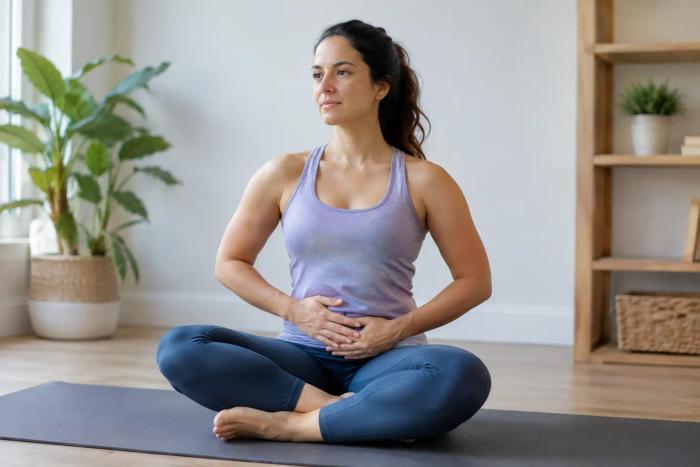
Begin with breath. Sit or lie down somewhere comfortable and place one hand on your heart and one on your lower belly. Breathe slowly through your nose and notice where your breath catches, flattens, or deepens. Do not try to force a mystical experience. Just stay with sensation. Even five minutes of conscious breathing can begin to shift how present you feel in your body.
Then bring awareness to the body itself. Notice warmth, tension, tingling, numbness, or emotion. Tantra invites sensitivity, and sensitivity grows when you stop rushing past what is already here. This can be surprisingly intimate, even when you are alone.
From there, explore touch with intention. This does not need to be explicitly sexual. Touch your arms, chest, belly, thighs, or face slowly enough to actually feel the contact. The point is not to chase climax. The point is to awaken responsiveness and connection. Pleasure often becomes richer when it is not demanded.
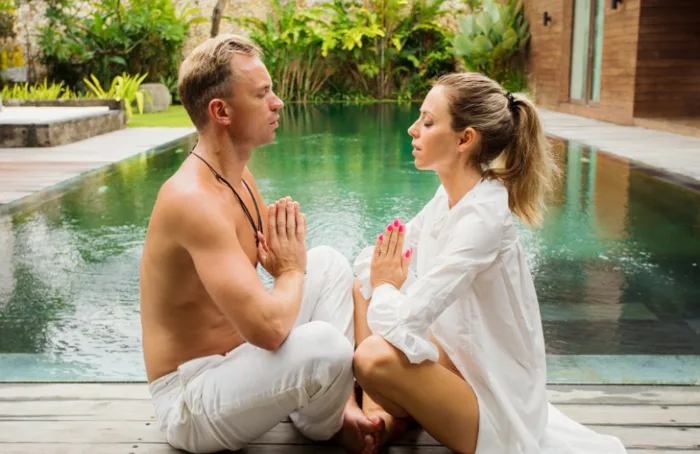
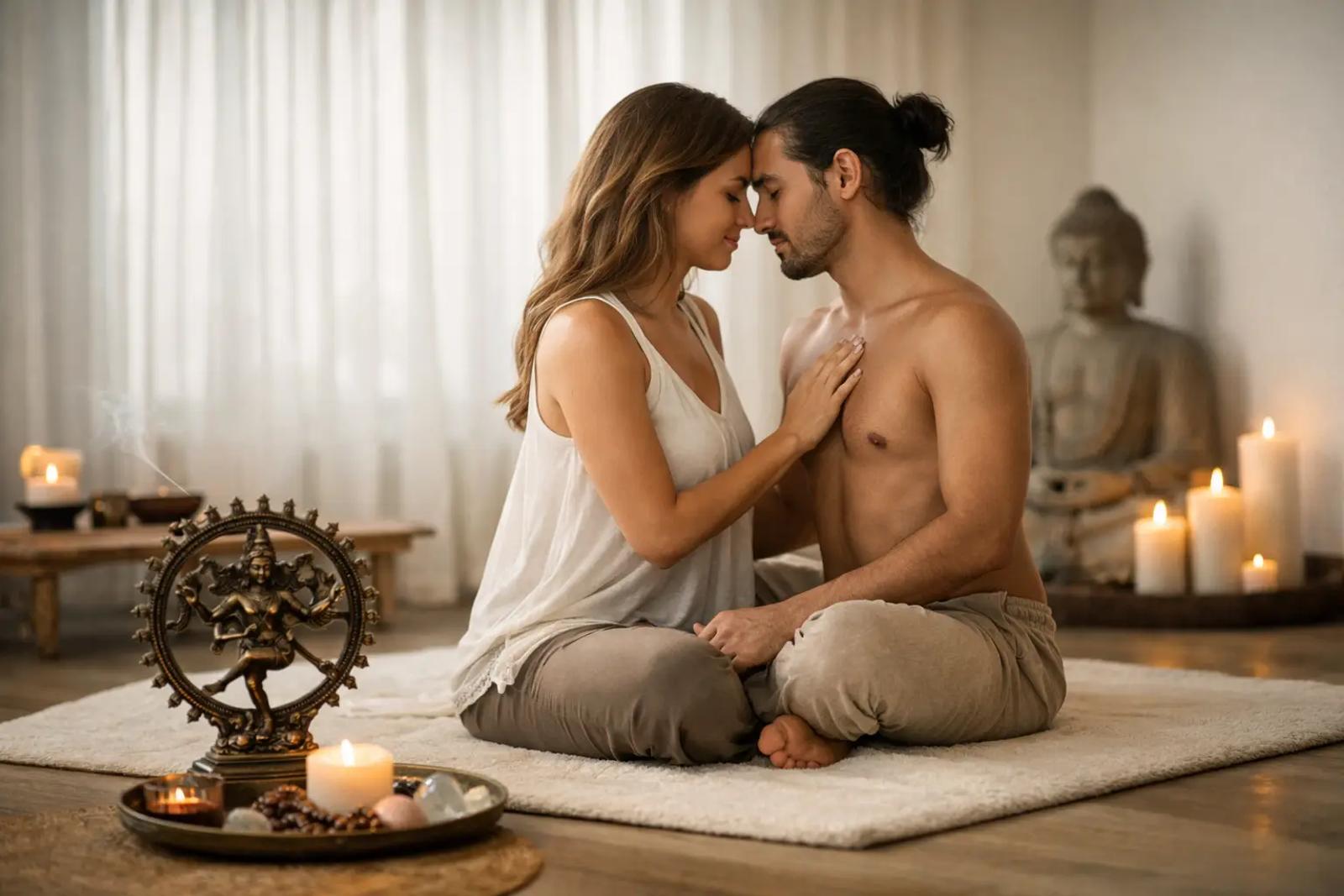
If you are practicing with a partner, begin outside your usual script. Sit facing each other. Make eye contact for a few breaths. Place a hand on each other's heart. Speak one honest sentence about what you are feeling in the moment. This can feel vulnerable, but it changes the energy immediately. It moves intimacy out of autopilot.
Safety comes before expansion
Tantra can be transformative, but only when the nervous system feels safe enough to open. For beginners, this is essential. If a practice feels overwhelming, overly intense, or emotionally destabilizing, going slower is wise.
This is especially true for anyone with a history of trauma, sexual shame, body disconnection, or relationship wounds. Tantra is not about pushing through your edges to prove growth. It is about building trust with yourself. Sometimes the most powerful practice is pausing, breathing, and saying no when something does not feel right.
Clear boundaries are part of sacred intimacy, not a barrier to it. The ability to name your yes, your no, and your maybe creates the kind of container where deeper pleasure can actually emerge. Without that foundation, tantra can become confusing or performative.
If you are learning with a partner, talk before you practice. Decide what you are open to, what is off limits, and what kind of check-ins you want along the way. This may sound unsexy to some people at first, but honesty is often what allows erotic energy to become more relaxed and alive.
Tantra for beginners in relationships
For couples, tantra often starts by changing pace. Many relationships suffer not from lack of love, but from speed, stress, and habit. Partners stop noticing each other. Touch becomes functional. Desire gets crowded out by daily life.
Tantra invites a return to intentional connection. That might look like taking ten minutes before bed to breathe together instead of scrolling your phones. It might look like a slow touch practice with no goal beyond sensation. It might mean speaking openly about desire, fear, or longing without trying to fix the conversation too quickly.
The trade-off is that this kind of intimacy asks more of you emotionally. Presence can be confronting. You may notice where you disconnect, where you please, where you shut down, or where you crave more than you have admitted. Yet this is also where tantra becomes deeply healing. It helps bring hidden patterns into the light so love can become more conscious.
A gentle beginner practice to try
Create a quiet space and set aside fifteen minutes. Sit comfortably and let your breath slow down. Place one hand on your heart and one on your lower belly. As you inhale, imagine breath moving into both places. As you exhale, soften your jaw, throat, and pelvis.
After a few minutes, begin a simple body scan. Notice where you feel open and where you feel guarded. If emotion arises, let it be there without analyzing it. Then place both hands somewhere on your body that wants kindness - your chest, your belly, your thighs. Offer yourself slow, present touch and stay connected to the breath.
If you are with a partner, you can do this side by side first and then share what you noticed. Not what you think you should have felt, but what was actually true. That honesty is where intimacy begins.
Do you need a teacher or course?
It depends on how you learn and what you want to explore. Some beginners do well with books and simple self-guided practices. Others benefit from structured support, especially when they want clear guidance around breathwork, conscious touch, polarity, intimacy skills, or sacred sexuality.
A good learning space should feel grounded, respectful, and trauma-aware. It should not pressure you into intensity or make inflated promises. The best tantra education helps you build capacity slowly, understand your body more deeply, and practice in ways that are both sensual and emotionally safe. That is one reason many people begin with guided online learning through spaces like YouTantra - it offers privacy, structure, and expert support without asking you to leap into a room full of strangers before you are ready.
What to expect as you begin
Your first experiences with tantra may be subtle. You may notice fuller breathing, more body awareness, stronger boundaries, or a new kind of softness with yourself. Over time, that can grow into deeper pleasure, more emotional range, greater intimacy, and a more loving relationship with your erotic energy.
The path is rarely linear. Some days you will feel open and radiant. Other days you may feel awkward, numb, or impatient. That does not mean tantra is not working. It usually means you are meeting yourself more honestly than before.
Let your beginning be gentle. You do not need to become anyone else to practice tantra. You only need the courage to arrive more fully in the body, heart, and desire you already have.
Our Free Guide
Thinking about tantra but not sure where to begin? This gentle beginner guide helps you build a safe, grounded foundation — so you can explore pleasure, presence, and emotional healing without forcing anything or chasing perfection.
You’ll learn what to focus on first and how to approach your practice with compassion and clarity, even if you’re nervous or coming from shame.
If you’re ready to reconnect with your body and deepen intimacy, this is the warm, trustworthy starting point you’ve been looking for.